

.svg) Explore our blog library
Explore our blog library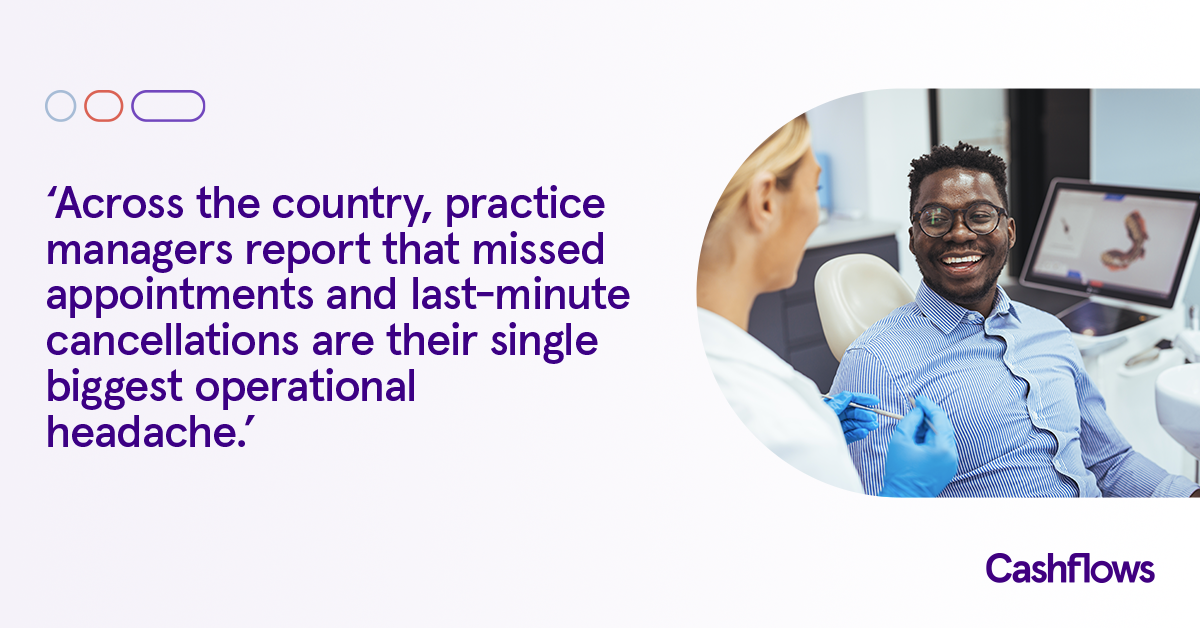
Cancellations and no-shows are a quiet crisis in UK dentistry. According to our research, across the country, practice managers report that missed appointments and last-minute cancellations are their single biggest operational headache. They do not just drain revenue. They waste valuable time that could have been spent treating patients who need care.
The numbers stack up quickly. A practice with ten missed appointments a week at an average treatment value of £120 is losing more than £60,000 a year. And this is not an isolated problem. According to Practice Plan, cancellations or no-shows are running at between 5 and 8% in most practices today. That is money, time and patient access simply lost.
At the same time, the broader market context is clear. The Office for National Statistics has confirmed that out-of-pocket healthcare spending is rising in real terms, with dental care highlighted as a major contributor to that growth. Patients are spending more privately, yet practices are still being let down by outdated payment systems.
Why traditional payments are failing practices
The problem is simple. Most practices still rely on in-person, card-present payments taken after treatment. That leaves them carrying the risk if a patient does not turn up. It creates more admin, more reconciliation, and more wasted effort chasing balances. Traditional acquirers have failed to give practices the tools they need to change this.
Digital tools that change the game
The solutions are already here. Pay by link via SMS, upfront deposits and remote payment options are straightforward to deploy and deliver immediate results.
- Pay by link via SMS: Secure bookings instantly. A simple link sent to a patient’s phone locks in commitment and cuts cancellations.
- Upfront deposits: Even modest deposits reduce the risk of no-shows and help practices recover costs.
- Remote payments: Payments over the phone or online give patients flexibility and remove pressure from reception staff.
These are not futuristic concepts. They are proven digital payment tools already transforming retail, travel and hospitality. Dentistry deserves the same.
Why it matters for practice managers
Practice managers are the gatekeepers of the industry. They reconcile payments, balance the books and fight to keep diaries full. For them, every cancellation avoided and every payment captured is a hard win.
Digital payments give them confidence that bookings are secure, income is protected and admin is lighter. That translates into more efficient clinics, less wasted time, and staff free to focus on patients instead of chasing debt.
Building trust with patients
Patients are used to paying deposits for hotels, gyms and restaurants. Extending that digital convenience to dental care feels natural. It also builds trust. A smooth, professional payment experience reinforces confidence in the quality of treatment.
And trust matters. In healthcare, every detail of the patient journey influences reputation. Safe, seamless payments are part of that equation.
The opportunity ahead
Dentistry and orthodontics represent a £10.2 billion market in the UK, growing at 17% year on year. Yet too many practices are still tied to outdated contracts and hardware.
This is the moment for fintech to step in. Not to compete on price, but to solve real problems. Our mission is to modernise healthcare payments. By enabling practices to take upfront deposits, send pay by link SMS and offer secure remote payments, we can help reduce cancellations, protect revenue and give patients the frictionless experience they expect.
Because when practices win back lost time and income, patients get better access to the care they deserve.